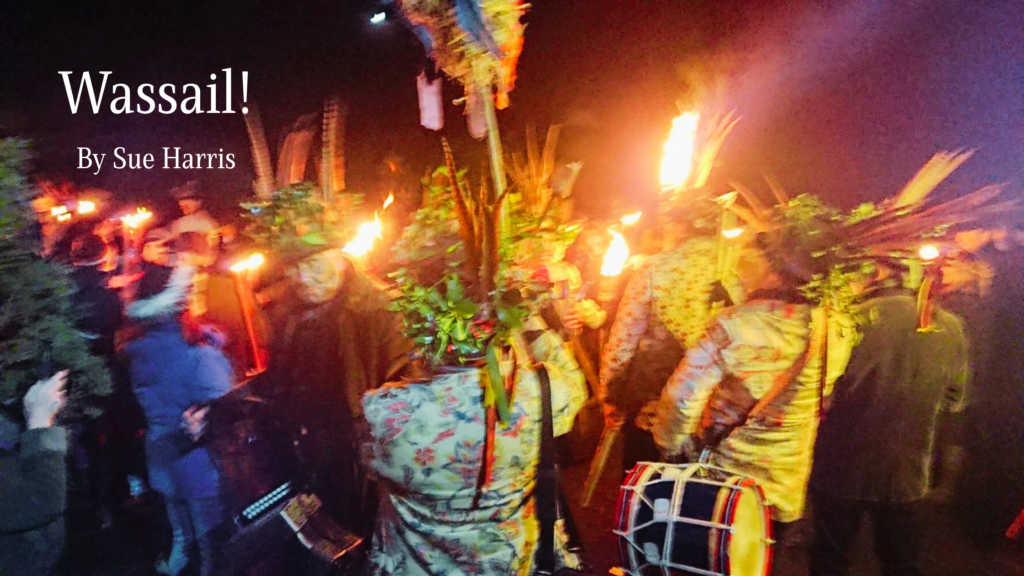
From the 6th of January (Twelfth Night) the ancient tradition of Wassailing starts. Sue Harris tells us all about the tradition, the reasons behind it and what happens at a Wassailing event.
For a long time the main highlight of my New Year is to go wassailing. I’ve been an avid follower of the Leominster Morris wassail since 1990. It turns the year around and puts the old year firmly behind me. We all meet up at a pub, which changes every couple of years, and light our flaming torches, then process to the assigned orchard, led by the Morris team and their musicians.
To be part of that procession and see a long line of flaming torches weaving along the lanes stirs up a very primeval feeling. When we reach the orchard and encircle all around, 12 bonfires are lit plus a small thirteenth one, the Judas fire, which is immediately stamped on.
Now with the light of Winter and the warmth of the fires we sing the wassail song and bless the apple tree, then the cider is poured around the designated Apple tree and toast hung up in the branches to ensure that there will be a good harvest for the coming year. There’s shooting and shouting up into the trees to get rid of any evil spirits, the Morris dancers start up with their weaving figures and clashing of sticks, music filling the cold air.
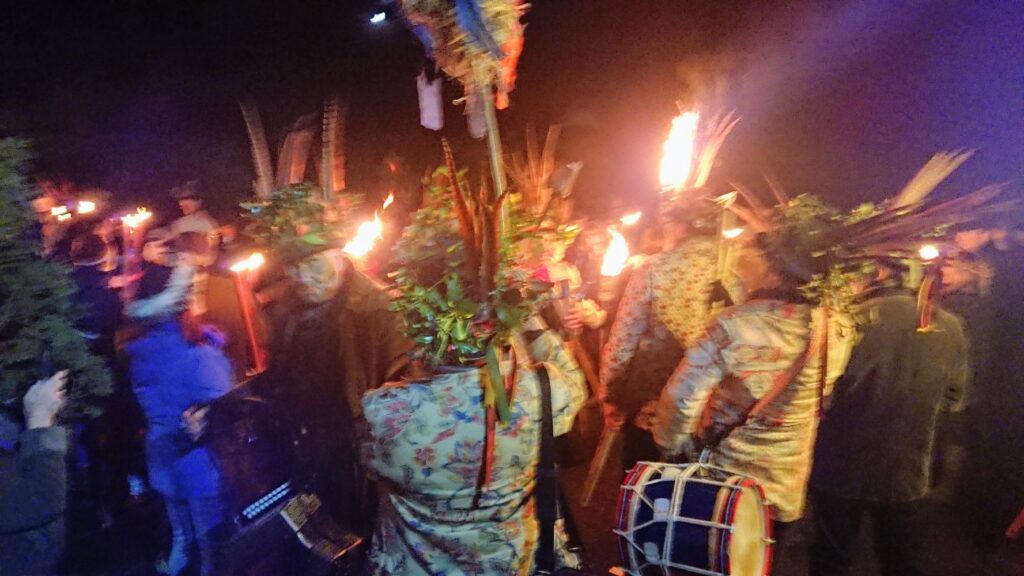
(Photo by Nick Comley of a Wassail at Eardisland, Herefordshire)
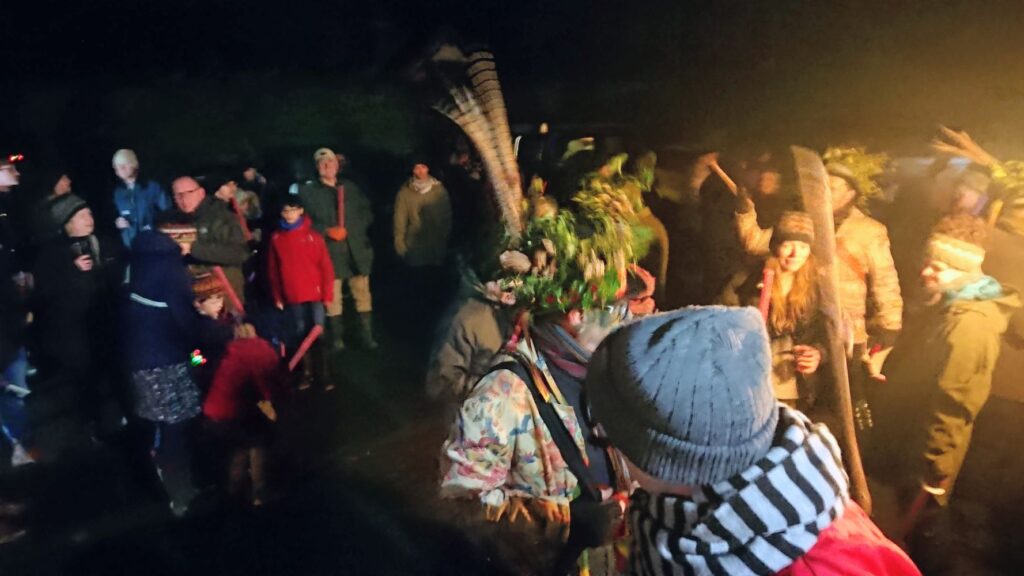
(Photo by Nick Comley of a Wassail at Eardisland, Herefordshire)
Finally wonderful scrumpy cider is passed round, which the team make themselves, to bring us all good cheer. It’s a merry gathering of friends and strangers coming together to honour and bless our apple trees, welcome in the New Year and put the old year to rest.
Wassailing is an old custom, the word, derived from the Anglo-Saxon Waes hal, meaning ‘be well’ or ‘be in good health’.
Blessing our fruit trees feels even more important in these times with so many of our orchards grubbed up and our food resilience being precarious. Go wassailing if you can and plant an apple tree before the spring.