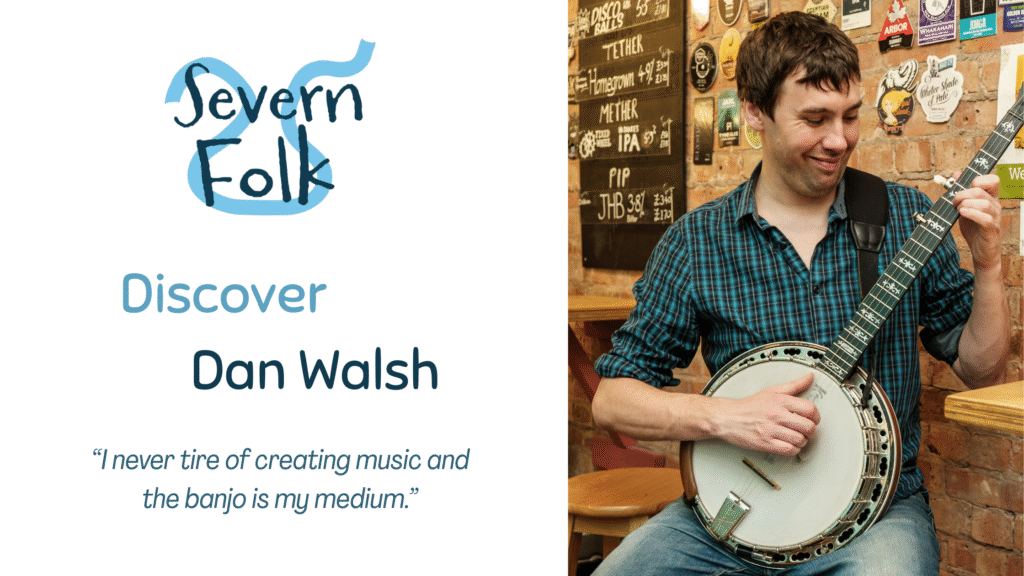
Dan Walsh, is one of the UK’s most exciting clawhammer banjo players and accomplished folk musician. Drawing from both Irish and American traditions while weaving in elements of more contemporary genres. Seeing his banjo playing live is a truly magical experience and definitely worth checking out. Alongside his solo work, Dan is a member of the Urban Folk Quartet and a sought-after collaborator, having recorded and performed with artists including Darius Rucker, Imelda May, Joss Stone, Seth Lakeman and the Levellers.
As the first in our new Discover series, Dan talks to Fergus McKeown about his musical story, insights into his banjo playing and what he’s up to at the moment…
1. How did you first encounter the banjo and how did you first get started playing?
I grew up listening to Irish folk music courtesy of my dad’s tape (yes, tape…) collection. I adored jigs and reels and that’s where I heard what I now know to be tenor banjo. So the banjo was always there in the background and I liked the sound of it but was absolutely set on guitar which I took up aged 9. But the banjo was a continued interest and what swung it was the playing of Gerry O’Connor and Barney McKenna. McKenna playing the High Reel was the final straw! So my folks went to the music shop in Stafford and asked about banjo teachers and there was one anywhere near called George Davies. Thankfully he was the best I could have hoped for.
2. Do you remember what your first banjo was and what do you play now?
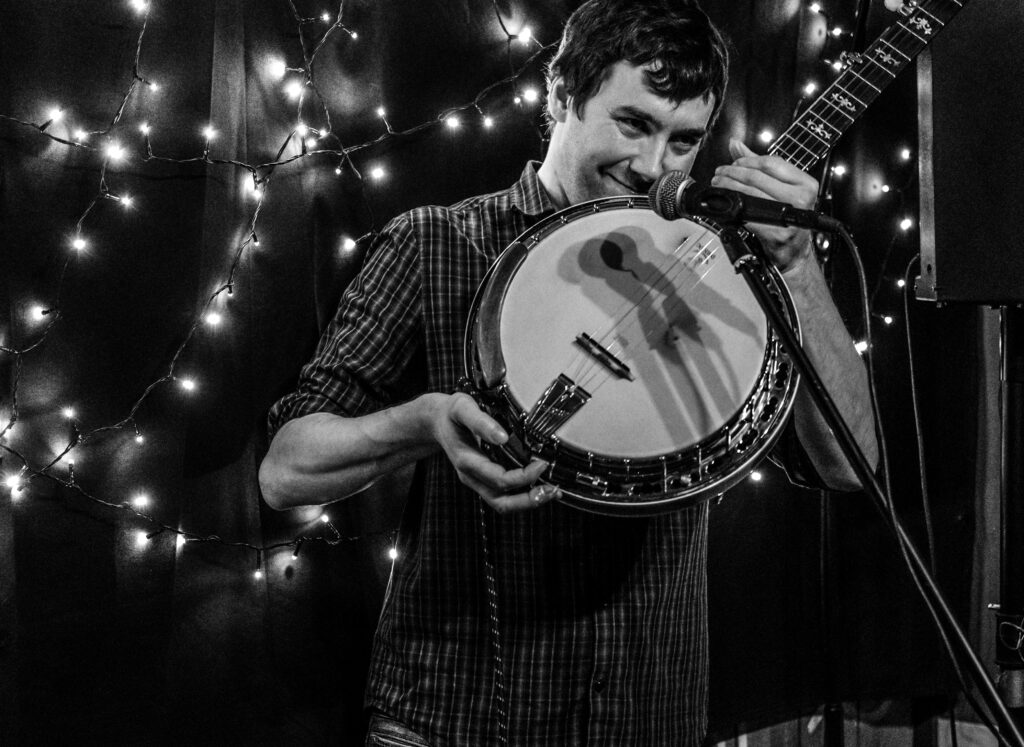
Despite being into the Irish stuff I ended up with 5-string purely because that’s what George taught and I had no idea about different banjos or styles. In my first lesson George played me a tune called Off To California which I knew from a Dubliners album so I thought it must be right! Back then I had a Goldtone banjo which was fine for beginners. Now I play Deering banjos.
3. What drew you to the clawhammer style in the first place and do you dabble in any other styles.
Well, I didn’t really get drawn into it so much as I ended up with clawhammer because that’s what George taught! Thankfully it’s worked out rather well as I think it’s given me a bit of a niche playing clawhammer style for pretty much any genre I can fancy. It was never about being clever or trying to widen the clawhammer net – I just have never seen any reason not to do music in clawhammer because it can work.
4. Who is your banjo GOAT (greatest of all time)?
Ooh that’s a tough one! I think Gerry (O’Connor) will always be my personal favourite because Irish banjo was and is my first love and he is the greatest of them all! But I’ve a very soft spot for Barney (McKenna). 5-string wise Ken Perlman is a massive direct influence on me while Bela Fleck is of course extraordinary. But my absolute favourite right now is Jens Kruger. He’s got all of the technical chops of a Fleck or a Ryan Cavanaugh but he’s just got something else. He’s so expressive with it and has such heart. He’s the only banjo player to make me cry at a gig because he was just so bloody good!
5. How have you found the banjo being perceived in the UK, has it changed over the years?
In my early days of gigging, I got pretty bored of fighting the banjo’s cause before I’d even played anything! It’s improved a lot but I still find it baffling that people are so sceptical about the idea of watching a banjo gig! When I first started gigging in pubs at 16, the howls of derision when the banjo came out were pretty tedious. Deliverance in many ways did the banjo’s image some harm. It’s a great bit of playing and probably lots of peoples’ introduction to the banjo but the hilbilly image has taken some shaking off! I think Mumfords helped with that – whether you like the music or not they made the banjo cool in a way that hadn’t happened before and it shows in my students. The average age dropped by 30 years and I ended up with much more diversity. That can only be a good thing.
6. Beyond just banjo players, are there any artists or genres that have shaped your sound and playing style in unexpected ways?
A great many! Funk hugely influences my playing in terms of grooves and riffs. Artist wise there’s almost too many to name but Debashish Bhattacharya has to get a mention for the Indian influence. Paul Simon for song writing too.
7. You’ve collaborated with many musicians, what do you look for in a musical partnership?
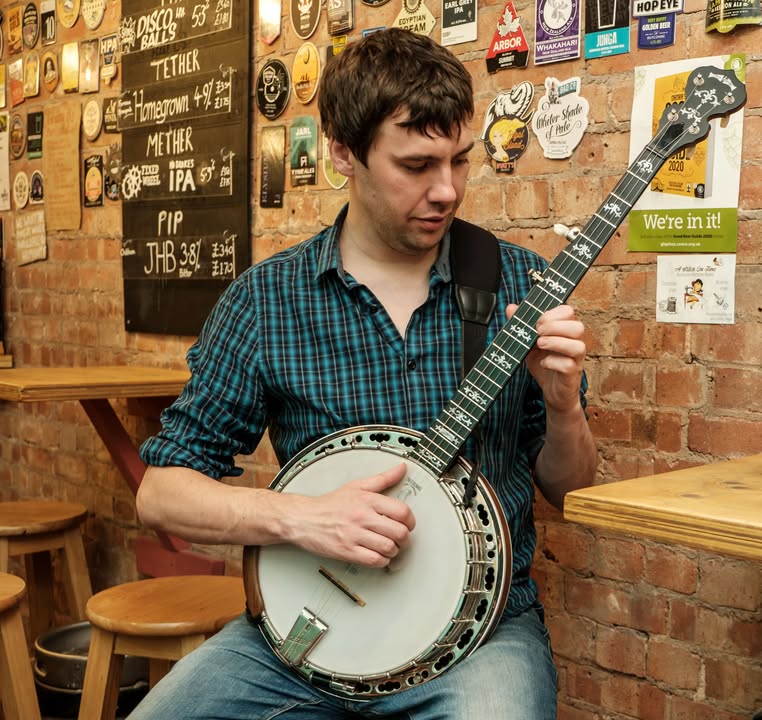
I always want a collaboration to be something either greater than or at least different from the sum of its parts. I think sometimes there’s an assumption that more musicians is a simple matter of just tacking people on and it’ll just work but it sometimes doesn’t! It’s important that everyone can adapt what they do to make a collaboration work.
8. How do you keep your relationship with music and the banjo fresh/ how do you stay inspired?
I never tire of creating music and the banjo is my medium. So honestly I don’t find it hard to keep it fresh in that sense but I do find it hard to find the time! I teach so much now plus gigging, travelling, my Patreon page and of course being a parent all make it tough. But I find writing tunes on demand relatively easy. Songs can be much harder to come by.
Spotlight and Discovery
Can you recommend one lesser-known artist or band you’re really excited about at the moment? And let us know why you like them?
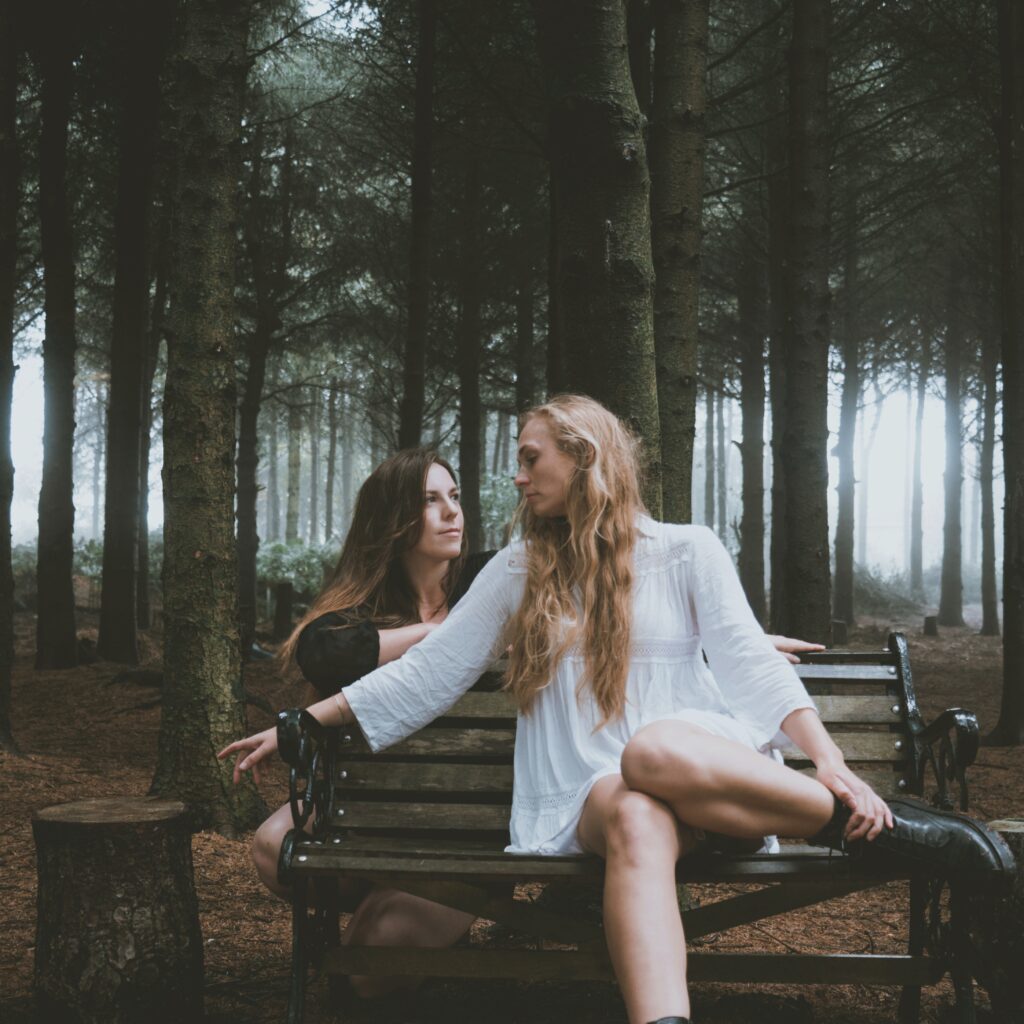
I saw True Foxes at Costa Festival in Portugal and really enjoyed them. I’ve also got a couple of young banjo students destined for great things, one of whom is local to Shrewsbury I’m pleased to say.
(True Foxes are an acclaimed Alt-Country/Americana cousin-duo from Cornwall. You can learn more about them by visiting their website and socials via the links below)
www.instagram.com/truefoxesmusic/
Finally, what’s next for you — any upcoming projects, tours, or collaborations you’re particularly excited about?
For me I’ve got a new album coming out in spring with tours of Australia, New Zealand and then in the UK so really looking forward to that. I’m also depping with a fab Canadian band called the Fugitives next summer so that’ll be really great too.
